Passkeys vs Passwords vs Seed Phrases: The New Era of Bitcoin Security
The move towards a Bitcoin-centric financial future demands not just powerful technology, but accessible security. In a self-custodial world, the method you use to access your wallet or account is really important. It determines not only how secure your assets are, but how confident you feel managing them.
This is why passkeys are rapidly replacing passwords and seed phrases, offering a big step forward in both security and user experience.
Yet, confusion still stays. Is the convenience worth the risk? Does a passkey tie you down to a single device? Let’s talk more.
The Problem Everyone in Bitcoin Knows, But Few Want to Admit
For a technology built on trustless principles, Bitcoin’s user experience has always been deeply dependent on trust. You trust yourself to back up a 24 or 12-word phrase. You trust that your paper wallet won’t get wet, your USB stick won’t break, and that one day you’ll still remember where you hid that metal plate under the floorboard.
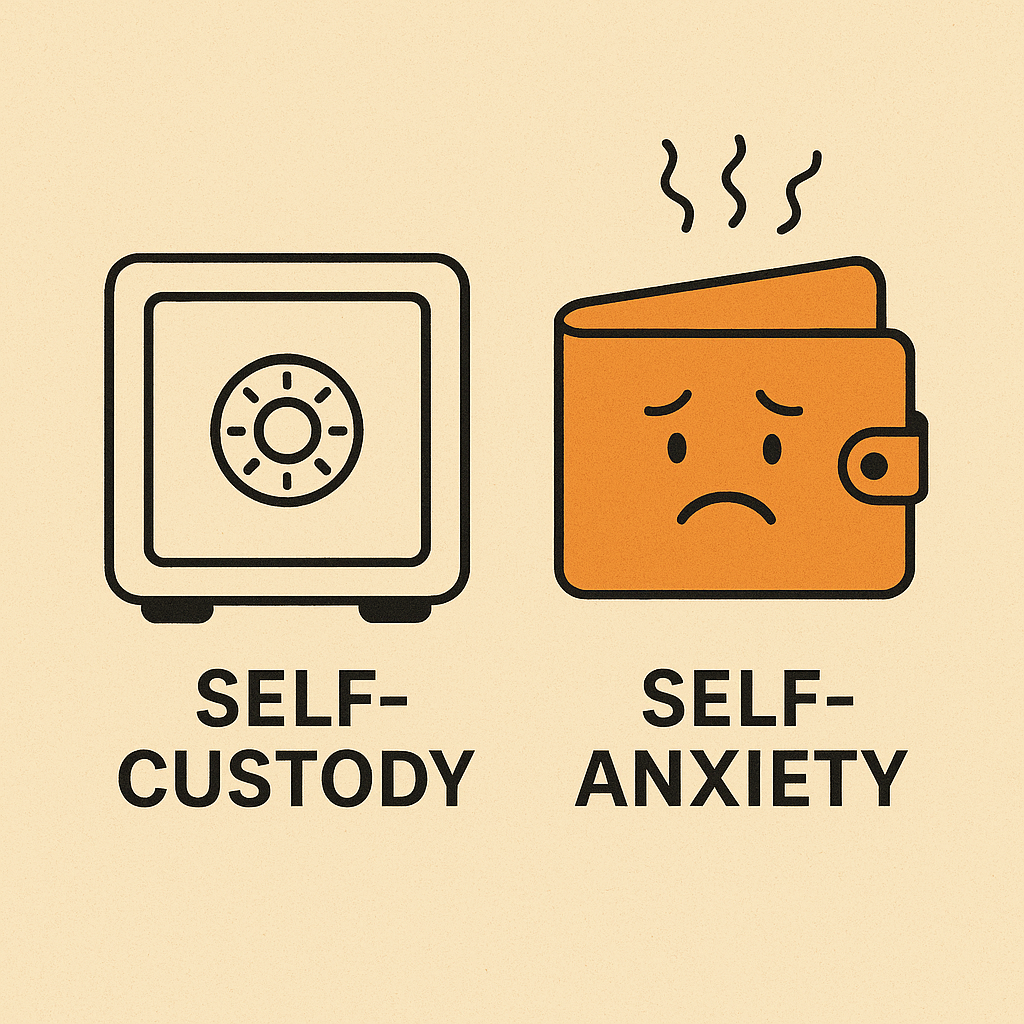
Bitcoiners call this “self-custody,” but for many people it’s really just self-anxiety. The irony is that we built the most secure money in history, yet most of us interact with it using methods that feel fragile, outdated, or painfully manual.
That’s the tension we at Tanari set out to solve: How do you keep Bitcoin’s uncompromising ownership model while making it actually usable, not just for the ultra-technical, but for everyone who believes in financial sovereignty?
Why the Old Methods Fail
1. Passwords: The Web2 Liability
Passwords are a product of Web2 thinking: something you remember, something you type, and something you can forget. They were designed for websites that could reset you when you failed. But Bitcoin doesn’t reset.
Even with the best password managers, you’re still operating inside a centralized vault. If that vault is breached, everything goes down together-it’s a single point of failure masquerading as convenience.
2. Seed Phrases: Powerful but Punishing
Seed phrases were Bitcoin’s first real answer to digital ownership without trust. It was revolutionary.
A 24/12-word seed is ultimate control in theory, but in practice it’s a ticking time bomb for most people. You either store it somewhere unsafe (easy to steal) or somewhere too safe (easy to lose).
Hardcore Bitcoiners accept that risk as the price of sovereignty. But if Bitcoin is ever going to reach mainstream adoption, “lose this phrase and you lose your life savings” can’t be part of the onboarding screen.
Passkeys: Self-Custody That Finally Feels Human
Passkeys represent a leap forward, not just technologically, but philosophically. They bring Bitcoin’s don’t trust, verify principle to identity itself. Passkeys don’t make you less sovereign; they make sovereignty usable.
Here is a breakdown of the three major benefits passkeys deliver:
1. Eliminating the Attack Vector (Goodbye, Server Breach)
The core difference is that a passkey completely removes the password from the server. When you create one, your device generates a unique keypair:
- The Private Key never leaves your device and is secured by your operating system.
- The Public Key is the only thing the service (like Tanari) stores.
When you log in, your device proves ownership of the private key without revealing it. This means there is no password hash for a hacker to steal, rendering large-scale breaches ineffective against your login. Phishing becomes nearly impossible.
2. The Biometric Reality (Your Face Stays Private)
One of the most frequent security concerns is whether biometric data is shared. The answer is a definitive no.
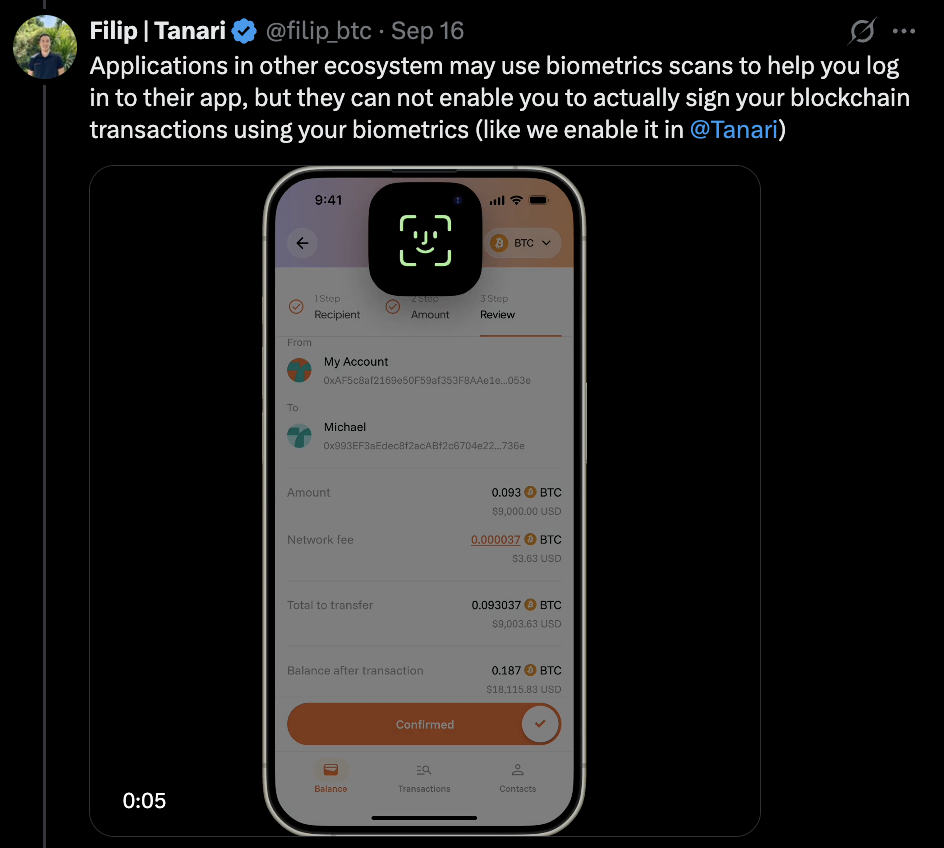
Your biometric data (Face ID, Touch ID, etc.) is never shared with Tanari or any external server. It’s only used as a local authorization step to unlock the unique, encrypted private key stored securely in a dedicated hardware enclave on your device, an isolated chip designed specifically to protect sensitive data.
Think of it this way: Your face or fingerprint isn’t the key itself, it’s the hand that turns the key.It simply proves that you are present and authorized to access the encrypted credentials your device holds.
And Tanari takes this even further. As our founder Filip says in his "What Citrea Makes Possible for Everyday Bitcoiners" thread series:
3. Freedom and Flexibility (No Device Lock-In)
The fear of being "locked into a device" is outdated. Modern passkey technology has solved this:
- Cross-Platform Syncing: Passkeys generated by major providers are securely and privately synced across all your linked devices. Lose your phone? You can instantly log in from your laptop.
- No Credential Reuse: Every single login generates a completely unique key pair, eliminating the risk that a compromise on one platform affects your Tanari wallet.
Passkeys + Guardians: The Tanari Standard for Self-Custody
For a Bitcoin Layer-2 financial platform like Tanari, the mission is clear: deliver real self-ownership.
Passkeys form the foundation of your daily access. They eliminate phishing, remove server-side vulnerabilities, and make logging in instant and intuitive. But Tanari goes a step further with its Guardian system, a social and device-based recovery model that ensures losing a device is never the same as losing your Bitcoin.
Guardians are people or devices you choose that you trust, so not custodians, not companies. They help you recover access when needed, but can never move or access your funds.
This two-layer design, passkeys for access, guardians for recovery, gives you Bitcoin-grade security with real-world usability.
Read this thread to learn why choosing the right guardians matters more than you think.
Why This Is Possible: Citrea’s Layer-2 Technology
All of this is built on Citrea, the first Bitcoin Layer-2 that brings expressive smart-contract functionality to the Bitcoin network.
Citrea enables Tanari to merge Bitcoin’s native security with scalable, programmable infrastructure. That’s what allows us to support passkey authentication, guardian logic, and future Bitcoin-based financial applications, all anchored securely to Bitcoin’s base layer.
Citrea provides the cryptographic backbone Bitcoiners demand, while enabling the kind of UX the next wave of Bitcoin finance deserves. It’s the bridge that turns Bitcoin from a store of value into a usable financial platform.

The problem was never Bitcoin itself, it was the outdated tools we used to access it. The era of choosing between passwords (convenience with centralized risk) and seed phrases (security with human error) is ending.
At Tanari, our choice is clear: passkeys are the foundation of self-ownership that actually works.
By anchoring access to your device’s secure hardware, we remove the weakest links of the old systems. And by pairing it with the Guardian recovery model, we ensure that losing a device never means losing your Bitcoin.
This isn’t a tradeoff between freedom and usability, it’s the new standard for how Bitcoin security should feel. Welcome to the new era of Bitcoin finance.
.png)
